
Blog
How to Stop Cat Litter Tracking Around the House

You scoop the box, sweep the floor, and an hour later there are little gray crumbs in the hallway again. Litter tracking is one of the most common complaints of cat owners, and it is not your cat’s fault: litter sticks to paws and fur, and cats often jump out of the box with a kick. You cannot stop it completely, but with the right setup you can keep almost all of it in one small area.
Why litter ends up everywhere
- Litter sticks between toes. Fine, dusty litters and lightweight crystals cling to paws more than larger granules.
- Cats kick and dig. Digging is natural, and some cats are enthusiastic about it.
- Low or open boxes. Short walls let litter fly over the edge.
- A jump right onto the floor. If there is nothing to catch litter at the exit, the first few steps spread it.
1. Put a trapping mat at the exit
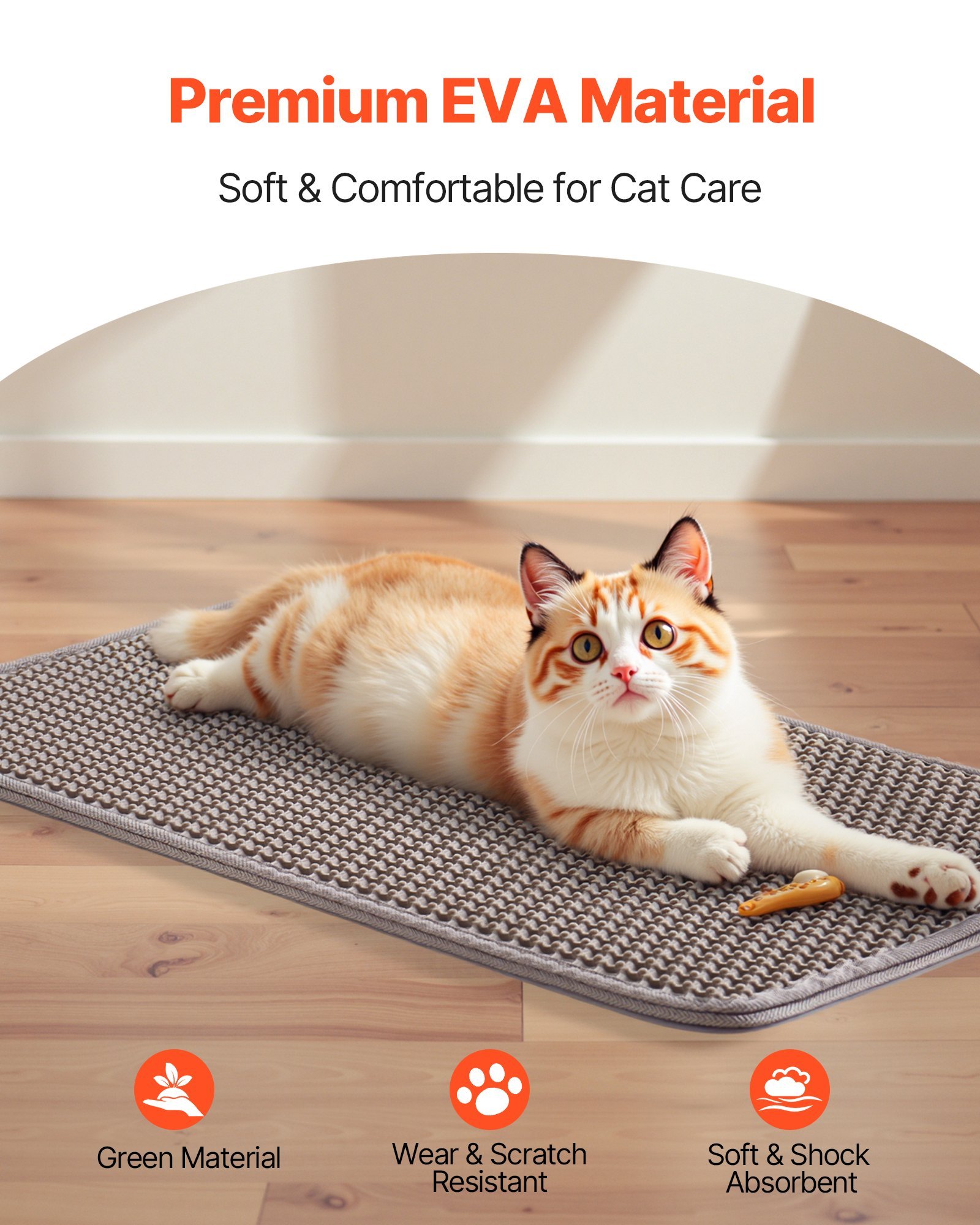
This is the single biggest improvement for most homes. A good litter mat catches litter from your cat’s paws in the first steps after they leave the box. Our double-layer cat litter trapping mat has a honeycomb top layer that grabs litter as your cat walks across it and holds it in a lower layer until you pour it back into the box. It is soft EVA foam, waterproof on the bottom and easy to rinse clean.

Place the mat right where your cat steps out, and make it big enough that they take at least two or three steps on it.
2. Choose a box with higher walls or a lid
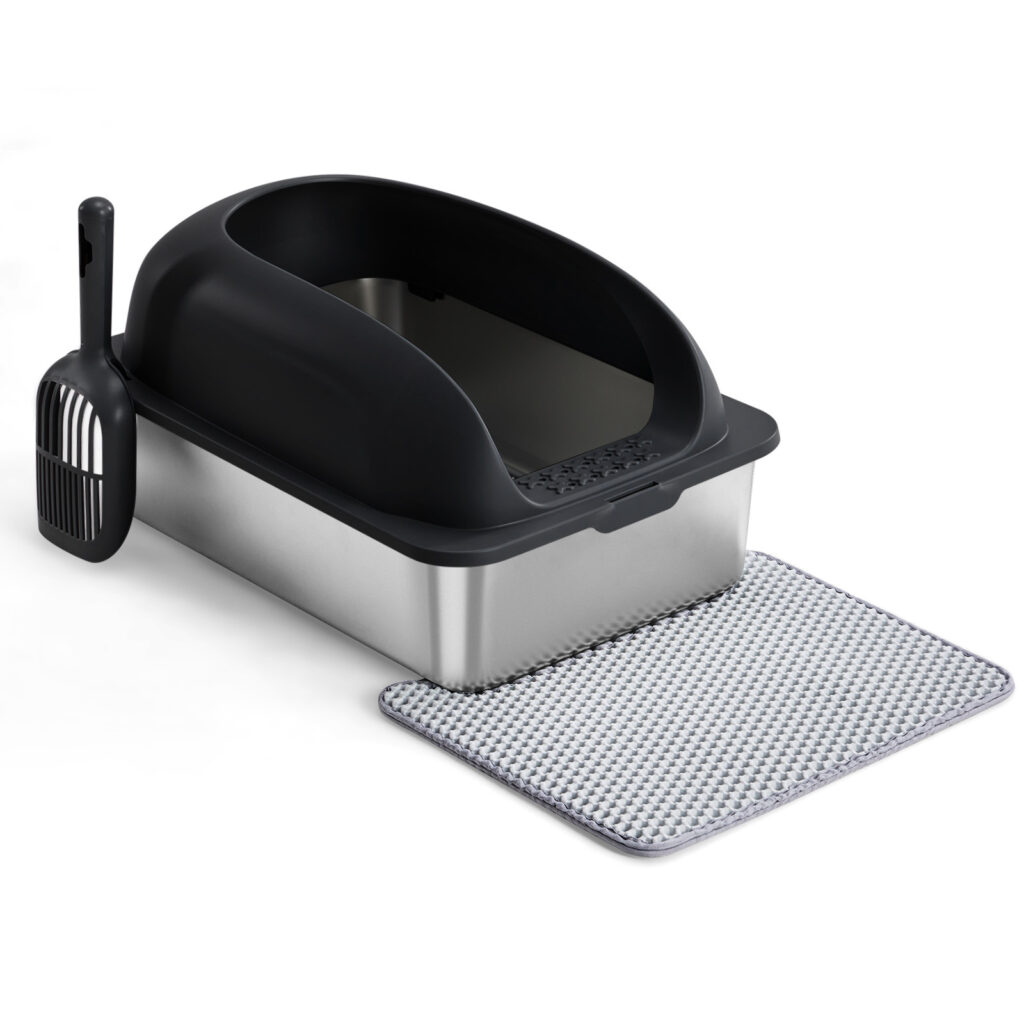
A covered box or a box with high walls keeps kicked litter inside. Many cats are happy with a lid, but some prefer an open box, so watch your cat for a few days after a change. Our stainless steel litter box with lid, scoop and mat has high walls and a covered design, and the smooth steel does not absorb odors the way scratched plastic can.
3. Look at the litter itself
If tracking is really bad, the litter may be part of the problem. Larger granules and low-dust clumping litters tend to stick less to paws. If you switch, do it slowly: mix a little of the new litter into the old one over a week or two, because some cats refuse a sudden change.
4. Do not overfill the box
About 2 to 3 inches of litter is enough for most cats. A very full box makes it easy for litter to spill over the edge when your cat digs.
5. Keep paws and fur tidy
Long-haired cats can carry litter in the fur around their feet. Trimming that fur a little, or brushing it gently, can reduce tracking. If your cat suddenly starts going outside the box, or seems uncomfortable in it, talk to your vet, because litter box changes can sometimes signal a health problem.
6. Make cleanup a 30-second habit
Once a day, empty the mat back into the box and give the area a quick sweep or vacuum. With a mat in place, this takes seconds instead of chasing litter around the whole house.
Shop the post
- Double-Layer Cat Litter Trapping Mat, 24 x 15 in
- Stainless Steel Cat Litter Box with Lid, Scoop & Mat
Free US shipping on every order, and 10% off your first order with code WELCOME10.


