Blog
How to Choose the Right Toys for Your Pet

The right toy can do much more than keep your pet busy. Play gives dogs and cats an opportunity to exercise, explore natural behaviors, interact with their owners, and add variety to their daily routine.
But not every toy is suitable for every pet. Size, material, play style, age, and supervision all matter when deciding what belongs in your pet’s toy collection.
Instead of choosing a toy simply because it looks fun, think about how your pet actually likes to play. A dog that loves chasing may enjoy something completely different from a cat that prefers stalking, batting, and pouncing.
In this guide, we’ll look at some simple ways to choose toys that are enjoyable, appropriate, and better suited to your pet’s individual play style.
Start With Your Pet’s Play Style
Dogs and cats have different personalities, and even two pets of the same breed may play very differently.
Some dogs love retrieving balls, while others prefer tugging, chewing, or investigating interactive toys. Cats may enjoy chasing moving objects, batting lightweight toys across the floor, or stalking toys that imitate prey-like movement.
Watch what naturally captures your pet’s attention. Their behavior can tell you much more than the packaging on a toy.
If your pet repeatedly ignores a particular type of toy, don’t assume they aren’t playful. Try a different texture, shape, movement, or style of interaction.
Choose the Right Size
Size is one of the most important considerations when selecting a toy.
A toy that is too small may be easier for a larger pet to swallow or get lodged in the mouth. On the other hand, an oversized or heavy toy may be frustrating for a smaller dog or cat to carry and manipulate.
Look at the manufacturer’s size and weight recommendations when available, and choose products appropriate for your pet.
For growing puppies and kittens, remember that a toy that fits them today may not remain appropriate as they get bigger.
Match the Toy to the Activity
Different toys serve different kinds of play, so having a little variety can make playtime more interesting.
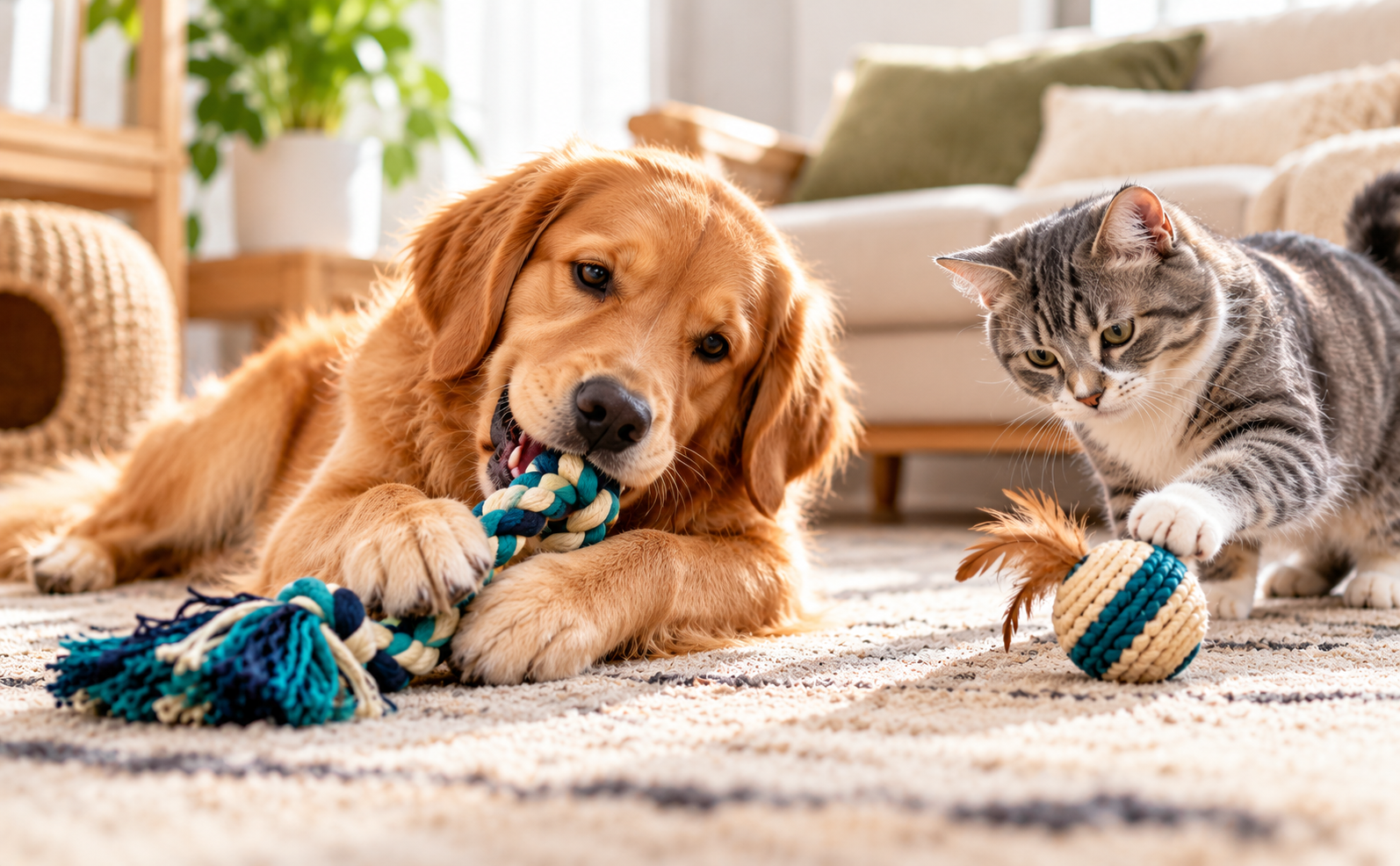
For dogs, balls and retrieval toys can work well for active games, while rope and tug-style toys encourage interaction with their owner. Interactive toys can also give curious dogs something different to investigate.
Cats often enjoy toys that move, roll, flutter, or encourage stalking and pouncing. Wand-style toys can be particularly useful because they allow you to control the movement while interacting with your cat.
The goal isn’t to buy as many toys as possible. A smaller collection of toys your pet genuinely enjoys is much more useful.
Inspect Toys Regularly
Even a well-made pet toy can eventually become damaged.
Check toys regularly for loose pieces, exposed stuffing, broken plastic, torn fabric, damaged ropes, or other signs of wear. If pieces are beginning to separate, replacing the toy is usually safer than continuing to use it.
Pay particular attention to toys that your pet likes to chew aggressively.
No pet toy should automatically be considered indestructible. How long it lasts depends heavily on the material and the way an individual pet plays with it.
Supervision Makes Playtime Better
When introducing a new toy, watch your pet use it before leaving them alone with it.
This helps you understand whether they chase it, chew it, try to tear pieces from it, or use it in an unexpected way. You can then decide whether the toy is appropriate for independent play or better reserved for supervised sessions.
Interactive play is also an opportunity to spend time together. A simple game of fetch, tug, or chasing a wand can turn a toy into a shared activity rather than just another object on the floor.
Rotate Toys Instead of Offering Everything at Once
Pets can sometimes lose interest when the same toys are available every day.
Try keeping a few favorites accessible and rotating other toys periodically. Bringing an older toy back after it has been stored away for a while can make it interesting again.
You can also vary the type of play throughout the week — active games one day, interactive toys another, and calmer activities when your pet is ready to relax.
This approach helps create variety without constantly buying new products.
Make Play Part of Everyday Life
You don’t need an overflowing toy box to keep your pet entertained. A few thoughtfully chosen toys, regular interaction, and different types of play can go a long way.
Pay attention to what excites your dog or cat, inspect their toys regularly, and replace anything that becomes damaged or inappropriate.
Most importantly, remember that the best toy is one your pet actually enjoys using safely.
Ready to find something fun? Explore HousePet’s Toys collection and discover playful picks for dogs and cats.